ScottishPower is backing Cancer Origins, a Manchester group studying how environmental exposures like air pollution may start lung cancer.
Most lung cancer research starts once a tumour exists. The Cancer Origins group is working further back, trying to see what happens inside cells before symptoms appear. That shift matters, because prevention depends on knowing where the process begins. ScottishPower has announced support for the group during lung cancer awareness month, and the project is worth a closer look for anyone who wants to understand where the science is heading.
What the group is trying to find
The team is led by Dr William Hill, a Cancer Research UK Institute Fellow at the University of Manchester. Their question is practical: how do environmental exposures, such as air pollution, contribute to the development of lung cancer? The work focuses on the earliest biological changes, the period when a cell is starting to go wrong but nothing is visible on a scan or felt by the patient.
That window is where prevention would have to work. If researchers can map the sequence of events that leads to a tumour, they can start to ask which steps are reversible, which are measurable, and which people are most likely to be on that path. None of that is established yet. It is the research agenda the funding is meant to advance.
Why air pollution and never-smokers are in the picture
Smoking remains the single biggest cause of lung cancer, and the source is clear on that point. Lung cancer is also the leading cause of cancer deaths worldwide, with almost 1.9 million deaths each year. Yet a meaningful share of cases occur in people who have never smoked, and that is where environmental factors become harder to ignore.
The group builds on an earlier study called TOPICAL, which was also supported by ScottishPower in 2022. That work looked at how air pollution may contribute to lung cancer in people who have never smoked, and Dr Hill co-led it. According to the announcement, the study helped researchers identify possible biological signals that could point to a person's risk years before a diagnosis.
Here's the thing: "possible signals" is a long way from a test. Biomarkers found in one study usually need to be confirmed in larger, independent groups, tested across different populations, and shown to predict outcomes better than existing methods. Until that happens, the finding is best read as a promising lead, not a tool that can be used in clinics.
What the research is aiming for
Dr Hill described the long-term goal in direct terms:
"By better understanding how lung cancer starts, we hope to move towards preventing it in people most at risk. Ultimately, our goal is to stop cancer before it develops, reducing the physical and emotional impact of a cancer diagnosis and I'm thankful for ScottishPower's support in helping us achieve this ambition."
The stated aims go beyond prevention. The team also hopes that understanding early cell changes will improve earlier detection and outcomes for patients. Those are separate goals with separate timelines. Prevention may take years of work before it changes what people are advised to do, and detection tools have their own hurdles around accuracy and access.
About the funding behind the work
ScottishPower's support sits within a longer relationship with Cancer Research UK. The company says its employees, suppliers and customers have helped raise more than £45 million for the charity since 2012. In 2024, ScottishPower also committed up to £4 million over five years to the Lung Cancer Centre of Excellence, and Cancer Origins is part of that same centre.
Corporate backing of this kind is common in cancer research, and it helps keep long, slow projects running. It also means the company has a stake in the story. Readers can weigh the announcement with that in mind: the funding details are stated openly, and the scientific claims should be judged on their own evidence. Andrew Ward, CEO of Customer Business at ScottishPower, framed the support as part of the company's wider commitment to tackling climate change, linking environmental health and cancer research.
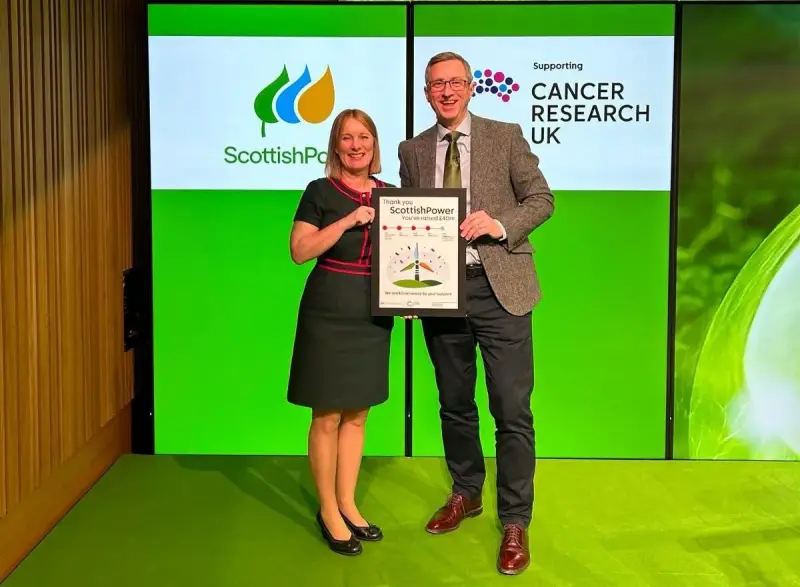
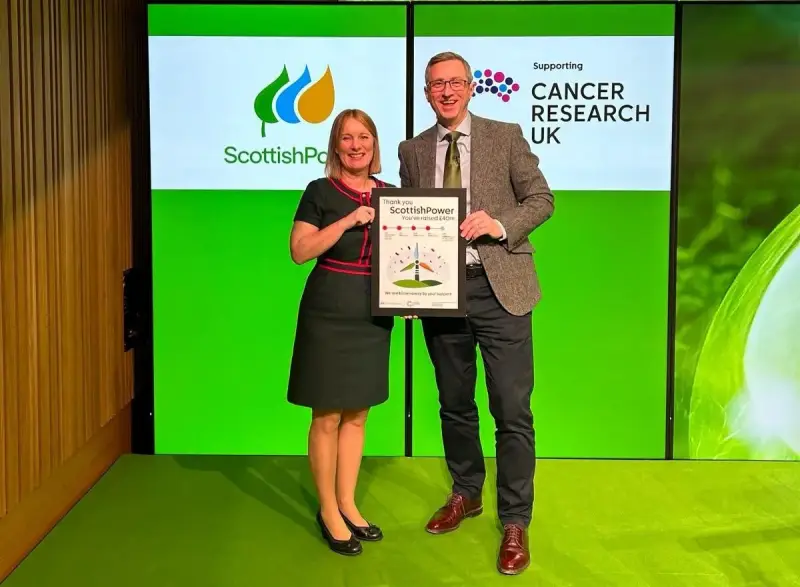
Cancer Research UK's CEO Michelle Mitchell and ScottishPower's CEO of Customer Business, Andrew Ward
What this means for everyday readers
For most people, the practical takeaway is not a new habit. It's a clearer picture of a known risk. Not smoking and avoiding tobacco smoke remain the strongest steps for lung health. Air pollution is harder to control personally, but checking local air quality forecasts on high-pollution days and limiting strenuous outdoor exercise when levels are poor are sensible general measures, particularly for people with existing lung or heart conditions.
Symptoms deserve attention regardless of research news. A cough that lasts for weeks, breathlessness that doesn't settle, coughing up blood, or unexplained weight loss are all reasons to book a GP appointment. Doctors can assess these symptoms properly, and nothing in this research changes that. This article is general information, not a guide to diagnosis or treatment, so anyone worried about their own health should speak with a doctor or pharmacist.
And yet the most useful thing to watch is the follow-up. Cancer Origins will need to show that its findings on environmental exposures and early cell changes hold up in larger studies. If they do, the next questions will be about who should be tested, what action a result would prompt, and whether reducing exposure changes the risk. Those answers will take years, and they are the ones that will decide whether this work becomes a prevention tool or stays a valuable line of inquiry.