Letting Films Breathe: Julie Bayer Salzman on Mindfulness, Pacing and Grief
Filmmaker Julie Bayer Salzman on her Mindful Shorts series, why she lets scenes breathe, and what her films can and can't show about mindfulness.
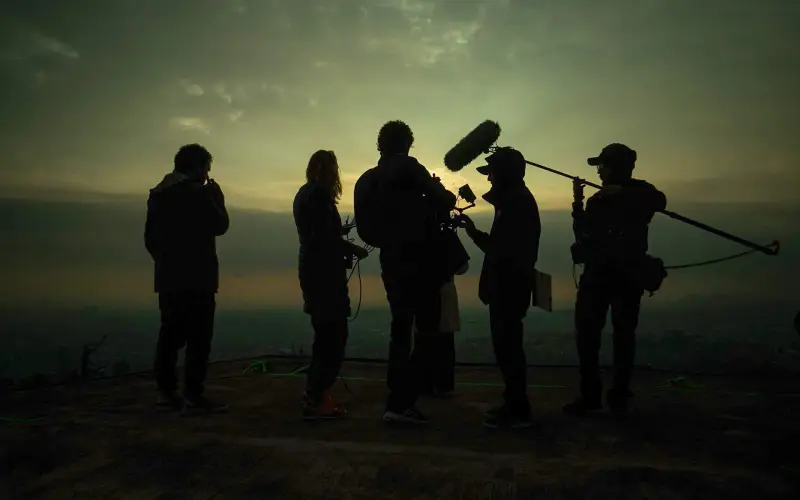
Julie Bayer Salzman didn't set out to build a series. In 2013, her five-year-old son came home from kindergarten explaining his prefrontal cortex and amygdala, the product of a social-emotional learning curriculum at his school. She was impressed enough to sign up for the same mindfulness course the school's principal used to train teachers. During one meditation, she pictured a short film. That film, Just Breathe, follows elementary school kids describing how mindfulness helps them work with anger. It was featured on Oprah's Super Soul Sunday, has been translated into six languages, and has screened in classrooms around the world.
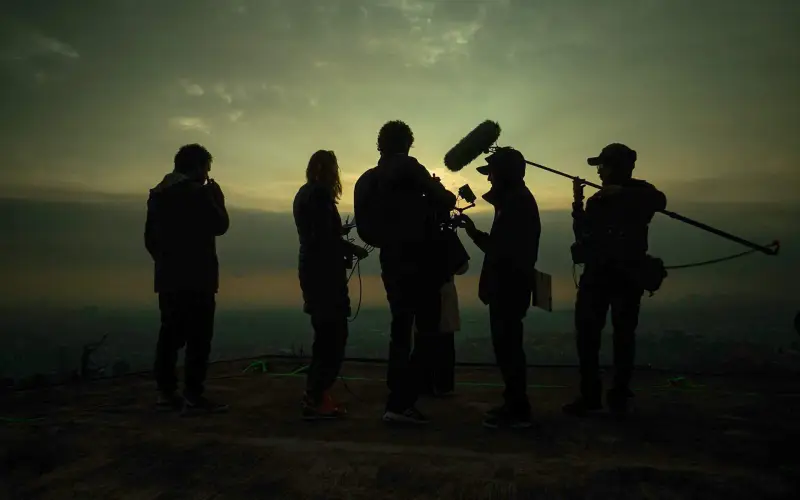
That one film grew into Mindful Shorts, an ongoing set of experiential documentaries that track mindfulness across the life span. The five films so far take on anger in childhood, anxiety in middle school, depression in high school, addiction in midlife, and grief in the elder years. Salzman makes them with her husband and creative partner, cinematographer Josh Salzman, through their company Wavecrest Films. The series is funded by donations and offered free to anyone who needs it.
In a conversation at her home in Los Angeles, Salzman talked about what advertising taught her, how her own practice shows up on set, and what she's learned from the people at the center of her two most recent films. Her answers are personal and reflective, and that's part of the point. They also raise a few questions that matter for anyone making or watching work about inner experience.
What Commercials Taught Her, and What She Had to Unlearn
Salzman spent more than a decade producing commercial campaigns before she directed her own work. The most useful thing she took from that world is a respect for visuals. Documentary filmmakers, she argues, often treat images as secondary to capturing the action and getting the story right. Story does matter most, she says, but film is a visual medium, and a documentary should be more than a record. It's worth taking the time to capture reality as beautifully as you can.
She's also wary of going too far in that direction. When a documentary looks too slick, the polish can pull attention away from the people on screen. Her working answer is balance, not style for its own sake.
Commercials also taught her to distill a story quickly. That skill has a cost. Salzman says she had to unlnear-unlearn the habit of cutting a scene short out of impatience or an assumption about short attention spans. "There is not a lot of breathing space in a commercial," she notes, and that lack of space carried over into her early instincts.
Her mindfulness practice changed that. As she learned to breathe more consciously, her editing shifted toward a slower, more experiential pace. She lets pauses sit between thoughts and statements, and she gives viewers room to take in what someone has just said. She admits the phrase "letting a film breathe" might sound corny, but it describes what changed in her work.
Choosing Projects and Dividing the Work
Wavecrest's stated mission is to make content with a positive social impact, and Salzman says the company chooses projects carefully so it doesn't add to the noise. Her test is a single question: what value does the project add to our shared human experience on this planet? She frames that in practical terms. Does the work help people evolve collectively? Does it change how they see the world, inspire them to be better people, or build connection with nature or with each other? Does it make people laugh? If a project meets none of those criteria, the team passes.
Working with her husband adds another layer. Salzman describes their skills as complementary. She's the big-picture person with a constant stream of ideas, always taking in her surroundings. She sees a film conceptually, and her producing background from commercials pushes her to lead as both director and producer. Josh handles the cinematography, and she trusts him to capture her vision in the best possible way.
Editing follows a similar split. Salzman lays out the story's structure, then hands the footage to Josh to shape the fine details. She has little patience for that work. He's the one who decides which exact frame a cut should land on. "He enjoys tedium in a way I don't," she says.
Asked about creative disagreements, she says there aren't many. They respect each other's strengths, and she describes the arrangement as a creative synergy she doesn't take for granted. Plenty of collaborating couples would describe that dynamic differently, and it's not a formula that transfers easily. Still, it explains how two people can make a steady run of films without the process stalling on disputes.
Filmmaking as Practice
The path from that first meditation to a full series was not planned in advance. Salzman says the success of Just Breathe made her realize how many people were hungry for this kind of learning, and the rest of the series grew from that recognition.
She uses the term "experiential" to describe what she's after. The aim is a film that produces an embodied response rather than passive viewing. The team doesn't follow traditional conventions just to tell a story. They shape the film so viewers might finish it feeling different than when they started, with a sense of calm, understanding, or a quieter inner state. Salzman talks about wanting a real effect on the nervous system. That's a goal she's describing, and it's worth keeping separate from any claim about measured outcomes. The films themselves don't make clinical claims, and she doesn't present them as treatment.
Her practice also shows up on set. Salzman says her presence and attention are stronger than they used to be, and she's less stuck in her own head. That gives her more room for spontaneity and creative problem-solving when something unexpected happens. In interviews, she rarely works from a fixed list of questions. She prefers a conversation where each answer opens a new question. The goal, she says, is to have an experience with the process itself, not to check off items.
Mindfulness is an inner experience, and film is a visual medium, so the obvious question is how you show what's happening inside someone. Salzman's answer is that filmmaking is multisensory. The team puts heavy weight on sound, including ambient noise and music, and on editorial pacing. Those elements have to match the emotional tone of what's being said and the changes a person is going through as they learn to show up more mindfully in the world. The inside gets shown through the outside.
Trust, Vulnerability and Unscripted Stories
The Mindful Shorts are unscripted, and many subjects talk about intensely personal struggles. Salzman doesn't have a formula for creating the trust that makes that possible. When asked, she says she isn't sure she can answer, because she doesn't consciously do anything specific. She thinks it comes from who she and Josh are as people. They aren't intimidating, she says, and she believes they're warm and open by nature. Her hope is that people instinctively sense they're safe to be vulnerable with.
That's a useful reminder for anyone trying to build similar work. Much of what makes documentary subjects open up may be hard to teach or copy. It also means the films carry the imprint of their makers' temperament, which is worth keeping in mind when evaluating what a film shows.
Planning a Life-Span Series
The sequence from childhood to old age, moving through anger, anxiety, depression, addiction and grief, was partly planned and partly discovered. After Just Breathe, Salzman felt there was more work to do. One night around 3 a.m., she saw the rest of the series in her head, got up, and wrote the progression in her journal in a way that made sense to her.
The logic follows developmental milestones. After elementary school comes middle school, when young people start to name "stress." Salzman thought about how people often project their anxieties onto the world around them, and that led to Release, a film in which the team projected images onto its subjects. High school is when many people begin to name "depression," which shaped Into Light. Then she turned to middle life, when addiction often surfaces and becomes a problem for many people. "And on and on," she says, describing the rest of the outline as a kind of middle-of-the-night revelation.
The Newer Films: Addiction, Grief and Length
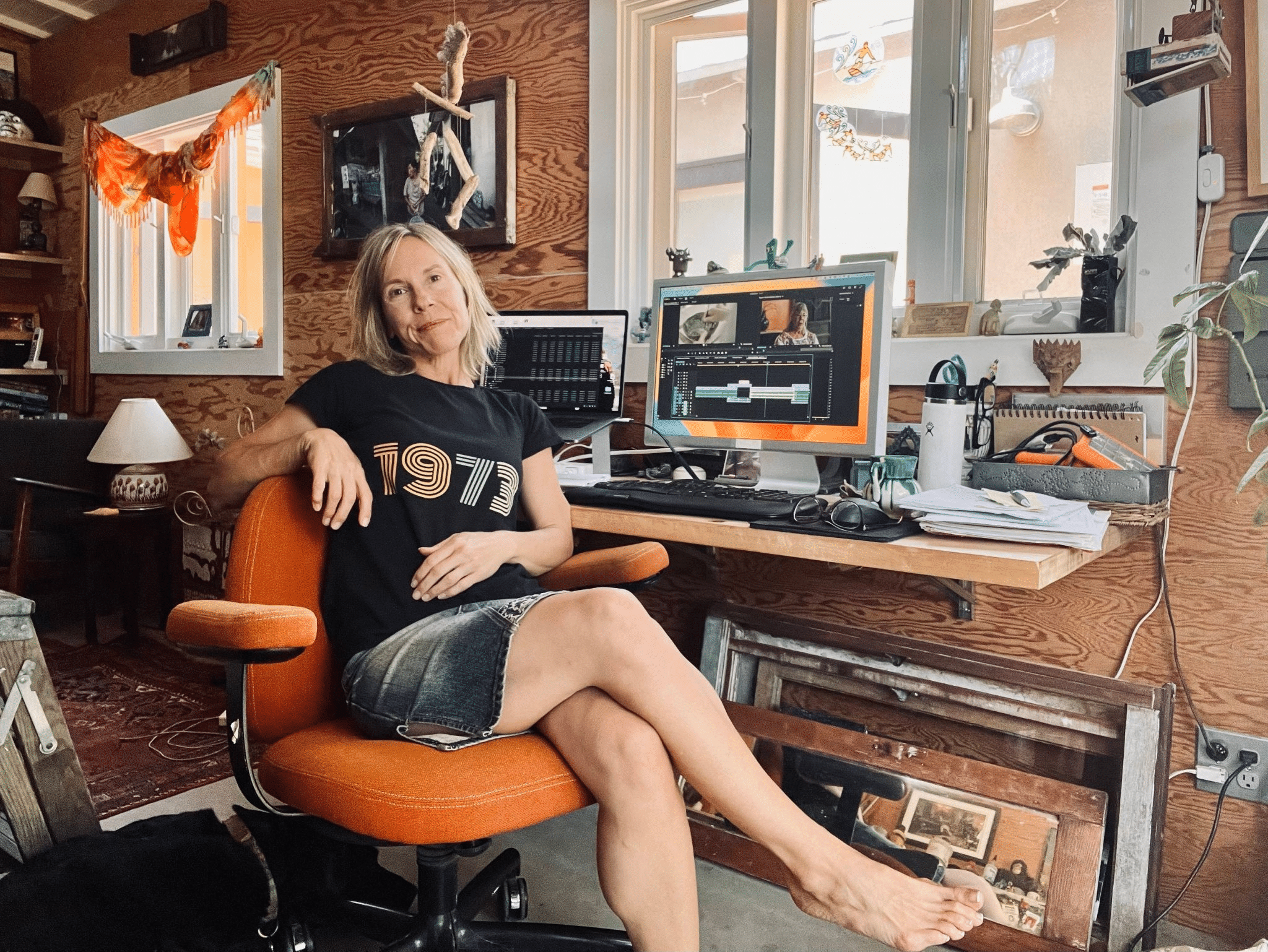
The two most recent films carry the series into adulthood. A Good Day, at 32 minutes, explores mindfulness and addiction in midlife, and it won at the Real HeArt Film Festival. Broken & Beautiful, at 23 minutes, centers on Sandy Phillips, who turned to mindfulness after the death of her daughter. It took top honors at LA Shorts.
A Good Day is the longest Mindful Short so far, and Salzman explains the length by the subject. Addiction, in her view, often grows out of experiences that earlier films touch on, including anger, anxiety, depression and trauma. It's also something many people don't confront until middle age. While editing, she felt the need to go deeper and cover ground she thought was necessary for the subject. The topic itself seemed to set the running time.
That choice is worth noticing. Many documentaries get trimmed to fit a standard runtime, and a longer cut here reflects a commitment to letting the material breathe. It also fits the experiential goal she described earlier. Viewers who need a short, punchy piece may find a 32-minute film slow, and that tradeoff is one the series has accepted.
On grief, Salzman says older subjects offered a perspective younger people rarely have. When you're young, a loss such as a first breakup can feel like the end of the world. Older people know it's one of many, and that life is full of losses. Sandy Phillips carries a wisdom that comes with age, though Salzman is quick to say that someone younger could speak to grief too. Phillips started practicing mindfulness specifically to process and navigate her daughter's death, and Salzman sees her presence as something earned and learned over years. Her broader point is that this kind of attention takes real time and intention to cultivate.
Making the film also touched Salzman's own life. She says it affected her husband more than her so far. Josh had dealt with the unexpected death of his mother from a heart attack in 2012, a loss that took him a long time to process. Salzman says that he no longer sees death as the end of a person or of a relationship with that person, which was hard for him to accept earlier.
The film also carries a painful postscript. The young kintsugi artist featured in Broken & Beautiful, Fumika Tanokashira, died suddenly last spring, in 2026. Salzman finds something profound in that. Tanokashira's work, through kintsugi, shows how to put a life back together after a terrible loss, and now she is the one who is gone. Salzman says the thought still leaves her speechless.
What Comes Next: Evidence and Anecdotes
Salzman's next film is expected to address trauma in young adults and to focus more directly on the science behind mindfulness. She hasn't had a vision for it yet, but she says ideas usually arrive, sometimes in advance and sometimes during production.
Her reasoning for adding a scientific angle is practical. Skeptics still exist, and for some viewers, personal stories aren't enough. "Proof must be in the data," as she puts it, and she understands that position. She says there's plenty of data available and she intends to use it. What's missing, she says, is the right collaborators who want to make that film.
For readers, this is the part to watch. Personal testimony can be moving and can show what a practice looks like from the inside. It can't on its own establish how well a practice works for a given person or group. A film that combines testimony with research could help viewers weigh both, but how it handles that balance will determine whether it earns trust. Salzman's acknowledgment of the skeptics suggests she sees that tension clearly.
Funding, Distribution and the Case for Free Films
The Mindful Shorts are donation-funded and free to view. Salzman says the not-for-profit structure makes grant money possible, and it lets the team keep full ownership and creative control of the content. She takes some satisfaction in knowing anyone who needs the films can watch them free, even if it takes years for them to find their audience.
The trade-offs are real. Without outside financial backers, the team doesn't have the kind of investment that comes with expectations of a return. Not-for-profit status also makes third-party distribution harder, so the films are self-distributed on YouTube, Vimeo, other social platforms, and the Wavecrest Films website. Salzman admits that's not the most lucrative path. She feels it fits the work, which is the stronger argument in her view.
Self-Awareness Before Environmental Action
Salzman's earlier work was environmental. Her first film, Time & Tide (2006), addressed climate change in the South Pacific, and for years the environment stayed near the top of the list of subjects she felt filmmakers should address. Then she began to think that trying to change people's actions without first helping them build self-awareness wouldn't work.
Her view is that everything starts with awareness. Without real personal growth at a broader social level, the Earth will keep suffering. Healing the planet, in her framing, starts with healing ourselves. She also believes that once a larger shift in consciousness takes hold, planetary health will improve, one person at a time.
That's a sweeping claim, and it's a value position more than a finding. It's useful as a lens for reading the series, though. Salzman is making the case that inner work and outer action are connected, and that the films are one way to open that door. Whether that connection holds up is a question her future work may begin to test. For now, the practical takeaway is in the craft: slow down, let people finish their thoughts, and trust that the quieter parts of a story can carry as much weight as the loud ones.