Autoimmune Illness, Self-Worth and the Pressure to Put Others First
Sara Hirsh Bordo’s experience raises questions about people pleasing and illness while underscoring why personal reflections aren’t medical evidence.
People who are used to putting others first can find it hard to recognize their own needs, especially when illness interrupts the routines that keep them useful to everyone else. Sara Hirsh Bordo’s reflections on that pattern offer a personal lens on chronic illness and self-worth. They don’t establish that people pleasing causes autoimmune disease, and Bordo is clear that her ideas are not a medical explanation.
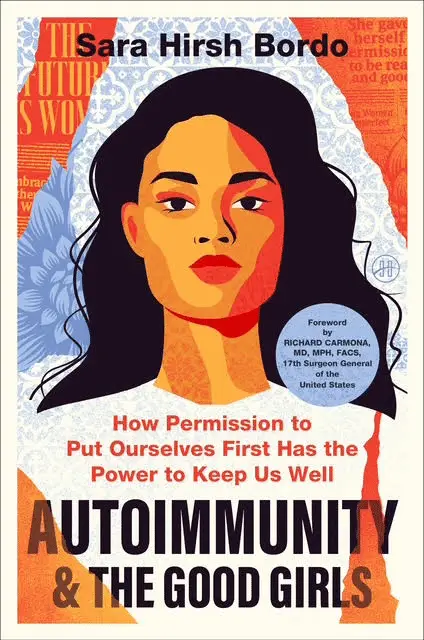
Bordo spent 15 years making documentaries about women before serious illness prompted her to look more closely at her own story. In her first book, Autoimmunity and the Good Girls, she calls herself a “recovering good girl”: someone learning to question the expectation that she should be capable, available and responsible for other people’s comfort.
Her central question is what people fear might happen if they stop being who others expect them to be. In conversation, she returned to the idea that the familiar list of obligations often rests on deeper worries: disappointing family, losing affection or safety, or discovering that a changed version of oneself feels unfamiliar.
Expectations and the fears beneath them
“I don’t think the ‘shoulds’ come first. I think the fears come first,” Bordo said. The distinction matters to her because telling someone simply to set boundaries can skip over the emotional cost they may anticipate. If a person’s identity has long depended on being helpful, saying no can feel like risking a relationship or a sense of belonging.
Bordo describes change as gradual. A person can try tolerating small moments of disappointing others and notice what follows. She believes that space can make room for freedom. That’s her account of personal change, not a treatment method or a guarantee that relationships will respond in a particular way.
She also sees these expectations as learned across generations. In a conversation with a book club of about 17 women of color, held the day before the interview, the topic of permission brought some participants to tears. Their responses suggested how long certain ideas about duty and self-denial can stay with people. They also show why a discussion about personal agency needs to leave room for family and cultural context, rather than treating everyone’s choices as equally easy.
A survey that raises a question, not an answer
Bordo began wondering whether a pattern she noticed among women with chronic or autoimmune conditions might be tied to family role. The women she knew, including herself, were eldest or only daughters. She and a group of volunteers looked for research on birth order and health, but did not find research specifically connecting birth order with autoimmune disease.
She then asked 300 women in the United States with autoimmune conditions to take part in an informal survey. Seventy percent said they were eldest or only daughters. Some of the others wrote to say they had taken on substantial responsibility for people around them despite not having that birth order.
Those results can’t show that birth order is linked to autoimmune disease. The survey was informal, had no comparison group of people without autoimmune conditions and cannot establish cause and effect. Its participants’ experiences may be meaningful to them, but the percentage alone doesn’t tell us whether eldest or only daughters are more likely to develop an autoimmune condition.
For Bordo, the written responses shifted the question from birth order to what she calls “heightened responsibility too soon.” That phrase describes a life experience she wants to examine. It is not a clinical measure, and the survey did not test whether early responsibility affects the immune system.
Story and biology are not the same kind of evidence
Bordo says, “Our body doesn’t just speak science, it speaks story.” She uses this as a way to describe how illness and life experience fit into her own understanding of herself. It shouldn’t be read as evidence that a person’s emotional history explains why an autoimmune disease began, or that changing a personal story can reverse one.
A doctor she identifies as Dr. Carmona introduced her to epigenetics, the study of changes in how genes are active without changing the underlying DNA sequence. Bordo used the concept to think through different periods of her life alongside what might have been happening in her body. She says this is her personal framework, not a medical account of her illness.
That distinction is useful for readers, too. A person’s account can help make sense of what living with a condition feels like, while questions about diagnosis, disease processes and treatment need medical evidence. Personal meaning and clinical explanation can coexist, but one doesn’t establish the other.
Bordo reaches for a scene from Ocean’s Eleven to describe what greater freedom feels like to her: a safe opening, its inner wheels turning, the door giving way. The image is metaphor, not a model of how the immune system works. She connects it with feeling able to make choices based on her own needs as well as other people’s.
Self-care can be a difficult decision in real life
Bordo’s account of an early morning shows that questioning people pleasing doesn’t make the old impulse disappear. Her best friend’s mother was dying, and Bordo expected she might have only about 48 hours left. Bordo was due to fly out early the next day after 12 days on the road. She also had a Reiki appointment booked for 3:30 that afternoon.
At 4 a.m., her first instinct was to get on a plane immediately. Instead, she paused to consider what she could offer her friend after weeks of travel and what the coming days might require. She kept the appointment, reasoning that arriving depleted might not help either of them.
That choice doesn’t settle what someone else should do in a similar situation. It shows the kind of weighing Bordo is learning to do: taking her own limits into account alongside another person’s distress. She said the people-pleasing habit was still there, even after writing about it. “I was a people pleaser for far longer than I have been sovereign,” she said.
She links the pressure to keep doing more with what she calls “a permission of worth”—the belief that a person is allowed to have a life that feels true and free. In her view, when that belief changes, the list of obligations can change too. For people managing chronic illness, however, energy, symptoms, care responsibilities and practical constraints can all shape what choices are available. Awareness alone may not remove those limits.
Illness can bring grief, frustration and self-blame
The interviewer described living with Crohn’s disease since age 14. After medical complications, she had her intestine removed in 2007, in her early 30s. Hernias, mesh infections and further surgeries followed, with complications continuing for years before things settled in early 2025.
Later, shingles led to six months of fallout, and at 51 a cancer scare unrelated to her autoimmune disease brought another surgery and recovery. The account describes a repeated disruption: each new health problem requires time and adjustment, even when someone knows how to manage their existing condition.
For the interviewer, the hard part was not simply knowing what to do for Crohn’s. It was watching plans collapse and dealing with what came afterward. She described fatigue, resentment, anger and feeling defeated, alongside an inner voice insisting she should be managing everything better. These are her experiences, not a description of what every person with an autoimmune condition feels.
When illness keeps disrupting daily life, frustration doesn’t mean someone has failed to cope. It can reflect the real demands of symptoms, treatment and recovery. People who feel overwhelmed may find it helpful to talk with a clinician about their health concerns and support needs. A doctor or pharmacist can also help address questions about symptoms or medicines.
Self-forgiveness without blame
Bordo draws a firm line between looking back at one’s habits and blaming oneself for getting sick. “We didn’t do anything to deserve what’s happened to us,” she said. She emphasized that she isn’t a doctor and is speaking from personal experience. Her reflections don’t mean that ignoring symptoms or putting others first caused her illnesses.
Looking back, she says she sometimes set symptoms aside because the timing felt inconvenient, while giving priority to work, family and friends. She had seen women exhaust themselves for others and understood that pattern as ordinary. Diagnoses forced her to confront her own needs after years of focusing on what others required.
“That is when the human being actually needs to come online the loudest, not the human doing,” she said. For Bordo, self-forgiveness came before she could work through the story she told about herself. She describes having disease, cancer and toxicity in her body, and says the scale of those experiences felt too large to address all at once.
Self-forgiveness here isn’t an admission of responsibility. It means trying to offer oneself some of the understanding one might readily give another person. That can matter when illness prompts questions about whether something could have been done differently. The answer shouldn’t be assumed: people don’t earn or deserve illness through their personalities, choices or inability to meet every expectation.
Rewriting a personal story takes time
Bordo says she once had little sense of who she was apart from the version of herself she thought would remain “liked, loved, and safe.” She came to see a pattern of giving other people too much authority over her well-being, one that reached into personal relationships, work and medical care.
Now, she says, she is trying to give more weight to her own experience and needs while still taking medical information seriously. She describes the work as rewriting the choices and framework she had inherited. In her view, the work began during a particularly difficult period in her life.
That approach won’t feel right to everyone. Bordo recognizes that some readers may find her focus on the mind and body unconvincing, while others may hear an emphasis on personal agency as blame toward people who can’t change their circumstances. She says she understands that her intended message can be received differently.
Recognizing a pattern doesn’t guarantee that a person can break it at once. Illness, relationships and circumstances affect what’s possible, and self-understanding doesn’t replace medical care. Bordo’s story offers a question to sit with: what would it mean to make room for your needs without treating illness as your fault? Her answer remains personal, but the distinction she draws is practical—self-forgiveness can begin without blame, and a person’s story can matter without being mistaken for a medical explanation.