Dentist Survey Highlights Oral Appliance Priorities, Side Effects and Testing
A dentist survey points to support, comfort and fit as key device priorities, while bite changes and jaw discomfort remain common concerns.
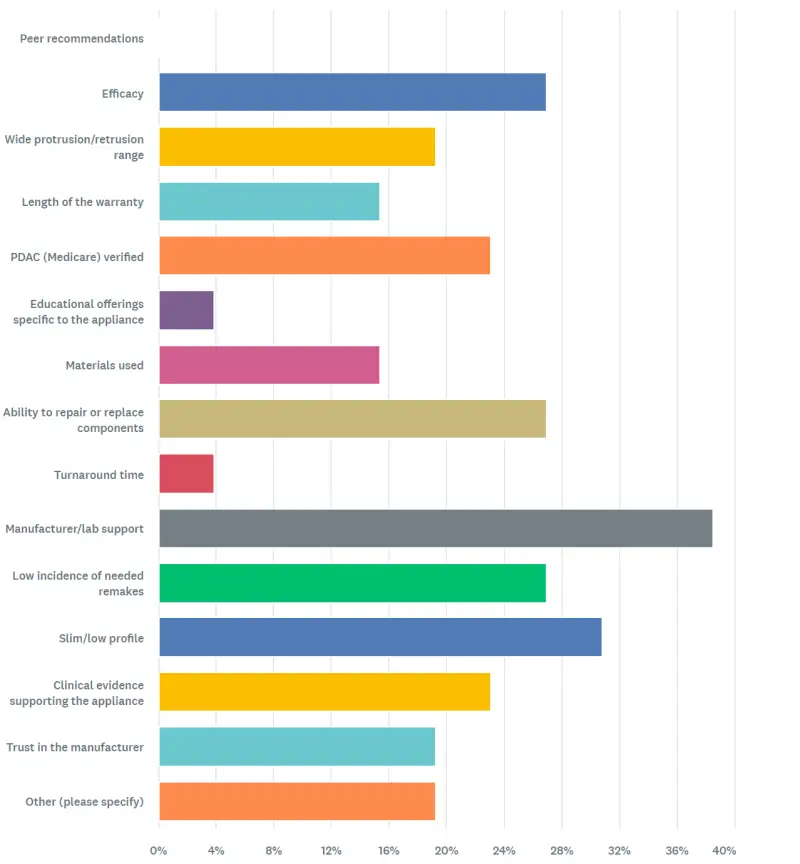
For dentists providing oral appliance therapy for obstructive sleep apnea (OSA), reliable manufacturer and laboratory support ranks ahead of speed when choosing devices. A November 2026 survey of dentists who had provided at least one patient with an oral appliance in the previous three years also highlights a practical tension: clinicians value devices that are slim and effective, while bite changes and jaw discomfort remain frequent challenges.
The results describe respondents’ reported preferences and practice patterns. They don’t compare devices in a clinical trial or establish that one appliance works better than another. The findings are most useful as a snapshot of what participating dentists prioritize and encounter in care.
Support, fit and repairability shape device choice
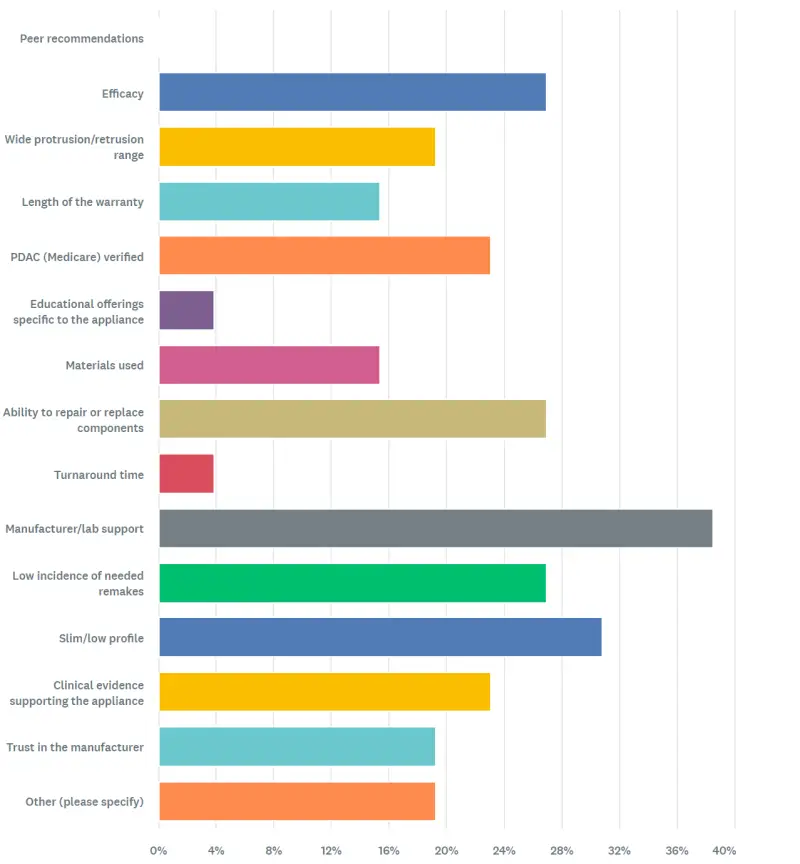
Manufacturer or laboratory support was selected by 38% of respondents, making it the most commonly named selection factor. A slim, low-profile design followed at 31%. Three factors each received 27%: clinical efficacy, the ability to repair or replace components, and a low rate of remakes. Respondents could choose up to three options from a list of 15.
That mix suggests dentists are weighing the practical life of a device alongside its expected clinical role. Support can matter when a device needs adjustment or a component needs replacing; a lower profile may influence how it feels to wear. The survey doesn’t define how respondents judged efficacy or support, so the percentages reflect their stated priorities rather than standardized performance measures.
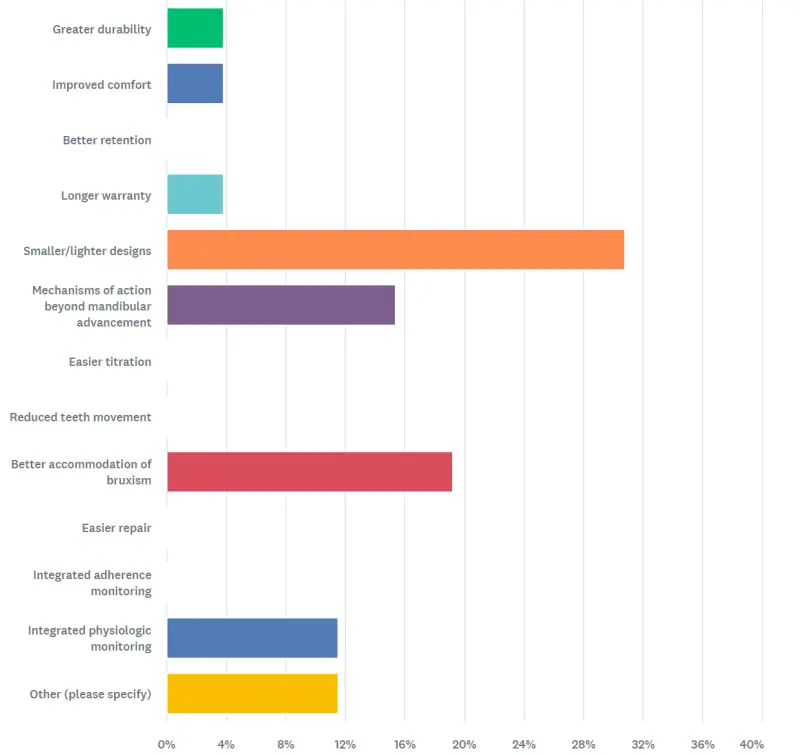
When asked about future designs, 31% wanted appliances that are smaller and lighter. Better accommodation for bruxism, or teeth grinding, was the leading concern for 19%, and 15% wanted approaches beyond traditional mandibular advancement, which moves the lower jaw forward. One respondent asked for a better morning repositioner, saying some patients experience bite changes even when they do repositioning exercises each day.
Bite and jaw symptoms are common reported problems
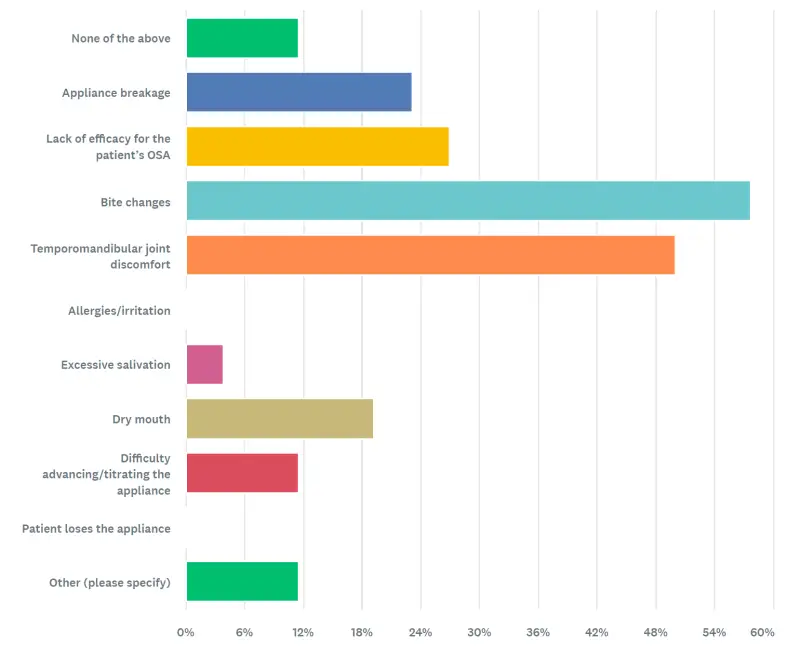
Bite changes were the most frequently reported problem, named by 58% of dentists. Temporomandibular joint (TMJ) discomfort came next, at 50%. Other reported issues included insufficient control of a patient’s OSA (27%), appliance breakage (23%) and dry mouth (19%). These figures describe how often respondents encounter problems in their practices; they aren’t estimates of the share of all patients who experience each one.
These reports put comfort and follow-up at the center of everyday therapy. A device can require adjustment as a patient adapts, and a change in bite or jaw symptoms is a reason to raise the issue with the treating dental or sleep clinician. The survey doesn’t establish what caused any symptom or how severe it was. Patients shouldn’t change their treatment based on survey results alone.
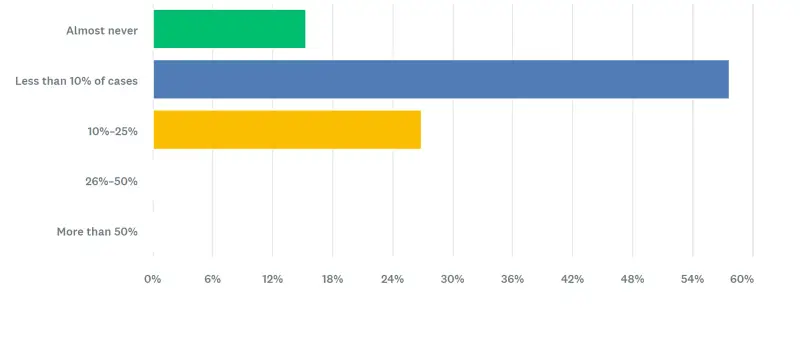
Most respondents said changes before comfortable use were uncommon in their practices: 58% reported adjustments, modifications or remakes in fewer than 10% of cases, and 15% said they were almost never needed. Another 27% reported that changes were needed in 10% to 25% of cases. No respondent selected a rate above 25%. The results suggest that many appliances can be made comfortable without repeated changes, while some practices encounter a more substantial adjustment need.
Digital records are standard for most respondents
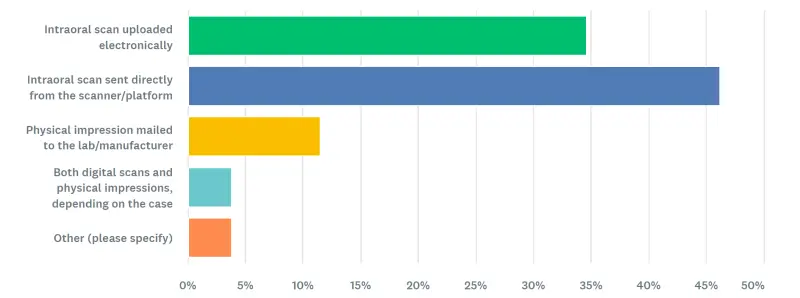
Digital impressions dominated the reported fabrication workflow. A combined 81% used intraoral scans: 46% sent scans directly through the scanner platform, and 35% uploaded them electronically. Twelve percent relied entirely on mailed physical impressions, while about 4% used digital or physical impressions depending on the case.
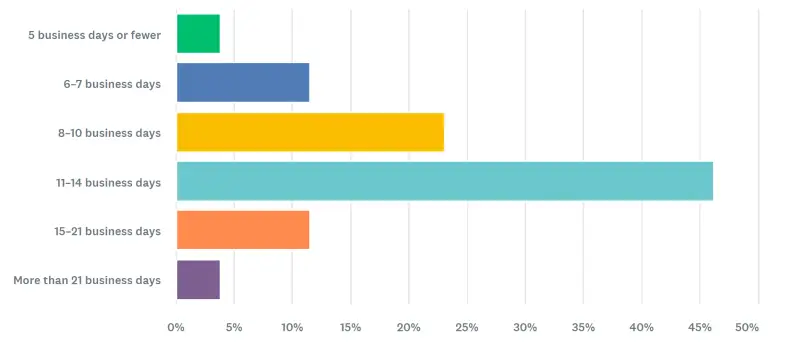
Turnaround time was rarely a top factor in choosing a device: only 4% selected it as a priority. When asked about the longest acceptable wait after submitting complete records, 46% chose 11 to 14 business days, and 23% chose 8 to 10 days. In this group, dependable support and device characteristics appear to carry more weight than the fastest possible fabrication.
Home testing is the leading reported efficacy check
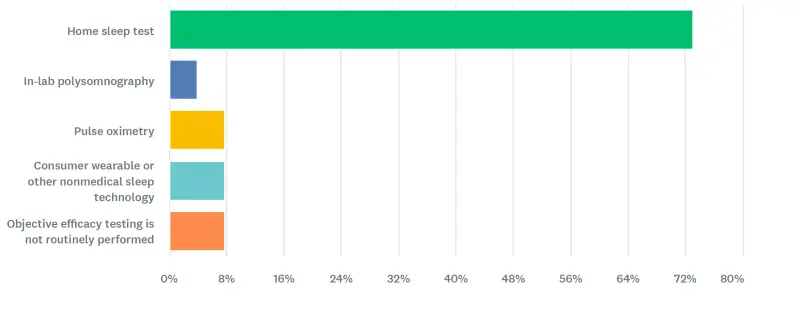
Home sleep tests were the most commonly reported method for checking whether therapy was working, selected by 73% of practices. In-lab sleep studies, pulse oximetry and consumer wearables each accounted for fewer than 10% as the primary method. Eight percent said efficacy testing was not routinely performed. The survey doesn’t assess the accuracy of those approaches or explain how testing decisions were made. For patients, whether and when to check treatment effectiveness is a matter to discuss with their sleep clinician.
Payment is split between insurance and self-pay
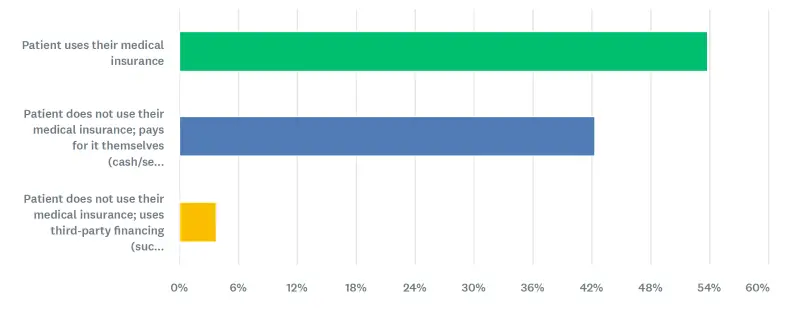
Just over half of respondents, 54%, said medical insurance was the most common way their patients paid for devices. Another 42% reported that patients most often paid out of pocket, while 4% named third-party financing. These are practice-level reports, not a measure of coverage or cost for any individual patient.
For people considering oral appliance therapy, the survey offers a useful set of topics for a clinician conversation: expected comfort, possible bite or jaw effects, how treatment response will be checked, and how the device can be adjusted or repaired. Its results show what participating dentists value and encounter; they don’t predict an individual patient’s outcome.